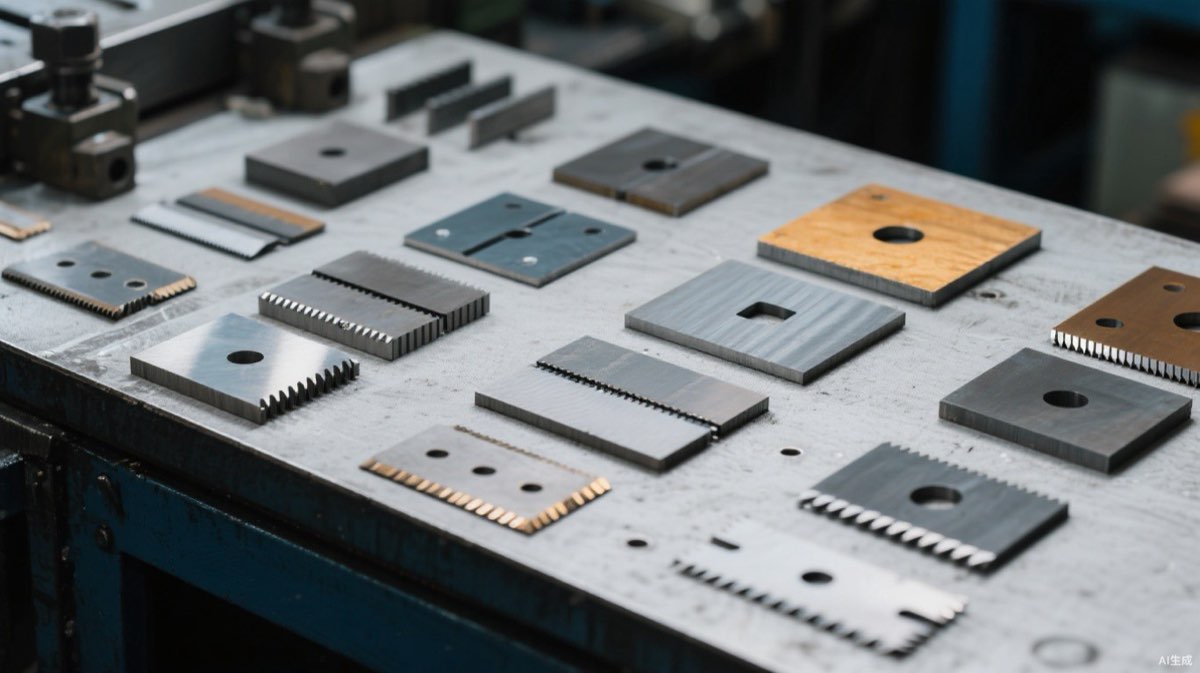
Material selection is the single biggest factor in blade performance — bigger than coating, bigger than geometry. A blade that wears out in two weeks on abrasive material can run three months with the right steel.
D2 / SKD11 tool steel is the workhorse of the slitting world. High carbon, high chromium, hardening to 58–62 HRC. It balances edge retention, toughness and price, which is why most packaging and converting lines run on it.
M2 high-speed steel adds heat resistance. If your blades run fast or hot — film slitting above 400 m/min, for example — M2 keeps its hardness where D2 starts to soften.
420/440 stainless is mandatory in food processing: corrosion resistance beats raw wear life when blades are washed daily with caustics.
Tungsten carbide is the premium option. It outlasts tool steel 5–10 times on abrasive materials like glass fiber or carbon-fiber prepreg, but it is brittle and costs more — worth it only when downtime is expensive.
The practical rule: match the steel to your material first, then optimize coating and geometry. If you are unsure, send us your current blade — we will identify its steel and recommend whether to keep or upgrade it.