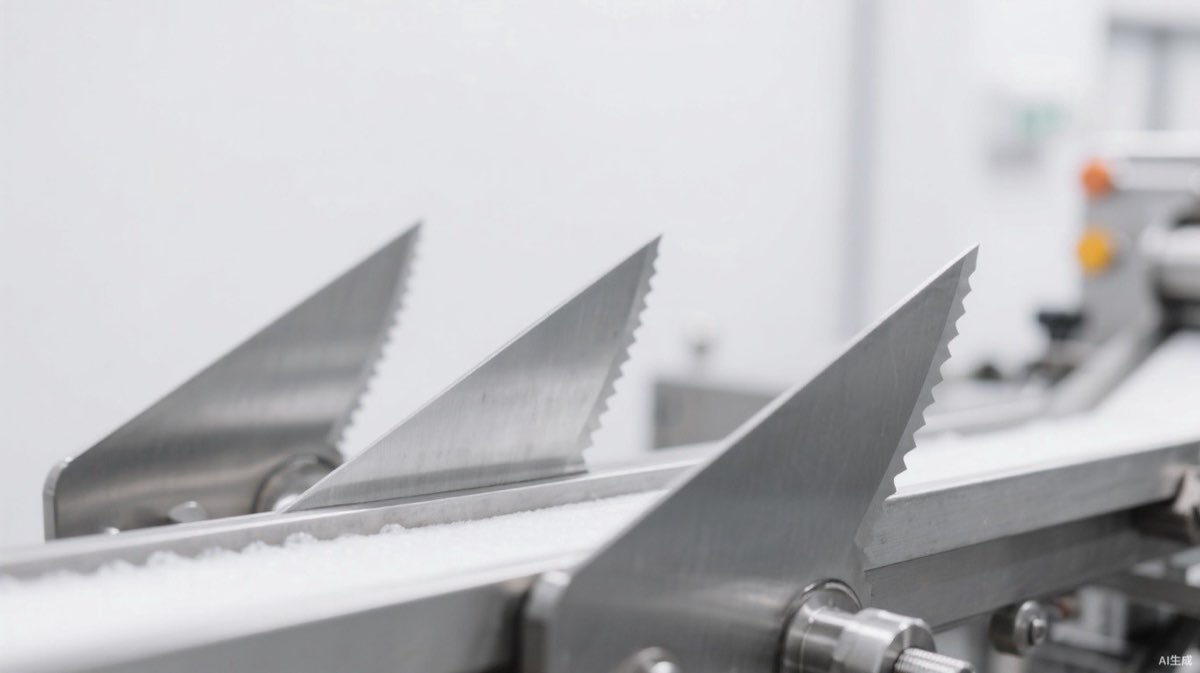
In food processing, a blade is not just a cutting tool — it is a food-contact surface under regulatory scrutiny. Three failure points dominate audit reports.
Material. Blades must be a listed food-contact alloy: 420/440 stainless is standard; tool steels like D2 are generally not approved for direct food contact in the EU. Ask for material certificates that state the alloy explicitly.
Surface finish. Ra above 0.8 µm shelters bacteria in grinding marks. Food blades need a polished finish — ideally Ra 0.4 µm or better — including the ground edge flanks, not just the faces.
Mounting design. Hidden threads, unsealed bores and crevices at holder interfaces are classic minor findings that stack into major ones. Sealed bore designs and crevice-free holders matter as much as the blade itself.
We manufacture food blades under full material traceability, with polishing certificates and optional FDA-compliant coatings. Ask for our food-line documentation pack with your first order.