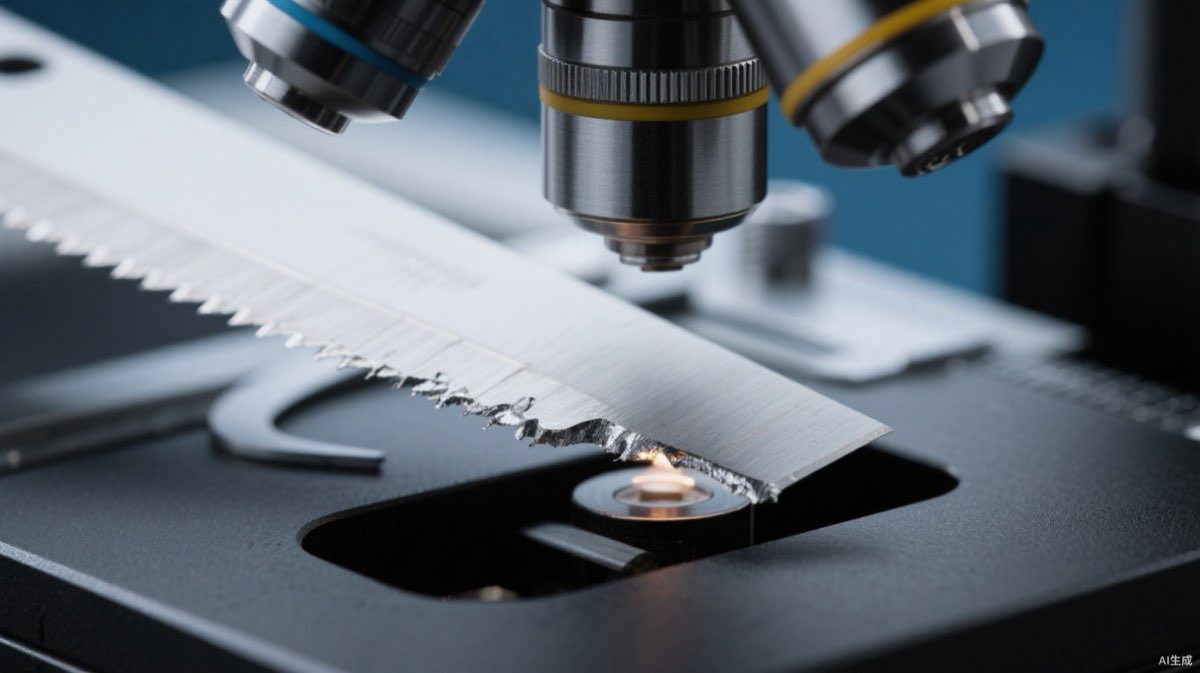
Blade wear is rarely just "the blade." It is the system: machine settings, material variation and maintenance habits. Audit these seven points before blaming the steel.
1. Blade clearance. The #1 wear driver. For scissor cuts, keep the blade overlap and clearance in spec; a 0.1 mm error can halve edge life.
2. Anvil condition. A grooved or work-hardened anvil roller chews blade edges. Rotate or regrind anvils on a fixed schedule.
3. Material tension. Loose web flutter makes blades cut material they did not need to cut. Stable tension alone can add 20% to blade life.
4. Blade speed matching. On rotary cutters, blade surface speed should match line speed; mismatches grind the edge instead of slicing.
5. Clean blades daily. Built-up adhesive hardens and micro-chips the edge on every revolution. Automatic wipe-downs pay for themselves.
6. Store blades properly. Blades knocking together in a drawer are blades you have already damaged. Use slotted racks or magnetic holders.
7. Log everything. Track meterage per blade set. The data reveals the real wear drivers and makes every other fix measurable.