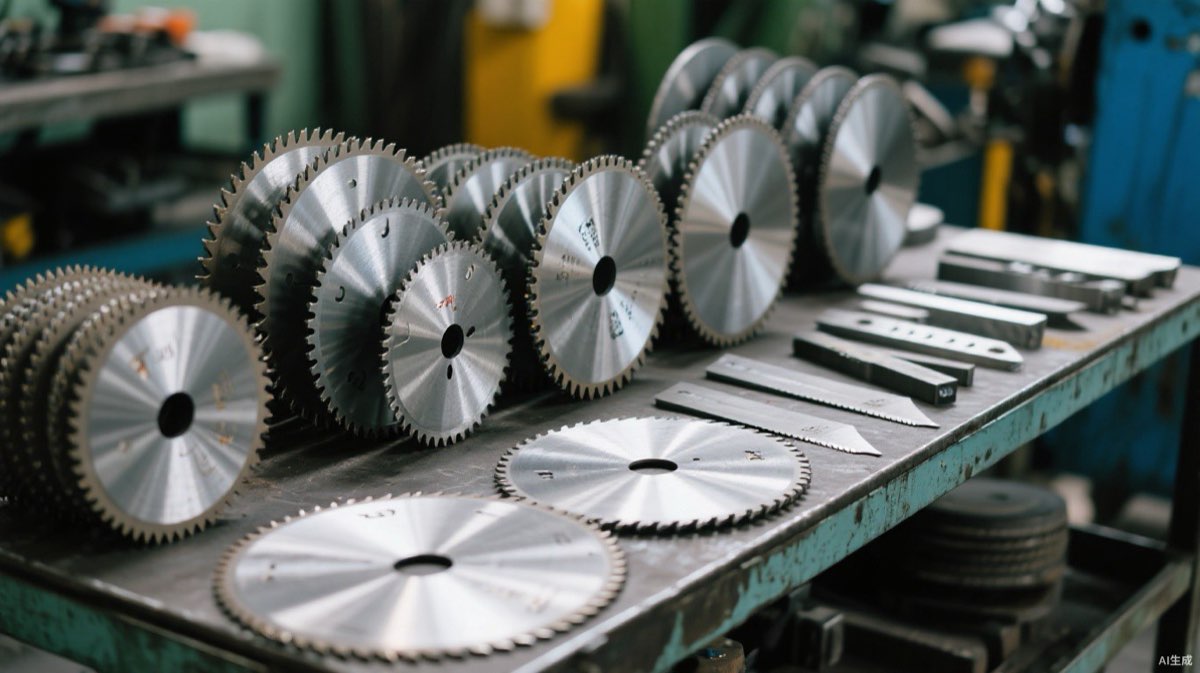
Most converting lines can, in principle, use either format. Choosing correctly affects speed, cut quality and blade cost more than any other decision.
Circular blades cut continuously — no stroke cycle. They are the only option above roughly 150 m/min line speed. Top/bottom blade pairs give a scissor cut for film and foil; single blades against an anvil roll handle paper and board. Downside: blade sets must be matched and tuned.
Straight blades shine at lower speeds and precise cut patterns: guillotine cross-cuts, perforation knives, bag-making sealing knives. They are cheaper to regrind and simpler to change, and they excel at multi-layer laminates where a scissor cut would pinch.
Hybrid setups — rotary slitting in web direction plus a straight cross-cut knife — are the standard in bag making and label production.
If you are re-engineering a line, ask for blades matched to your actual speeds and materials, not to the machine OEM's 15-year-old default spec. We spec both formats daily.